

• Eficacitate redusă a dezinfectantului.
Prin urmare, monitorizarea modificărilor pH-ului și gestionarea lor adecvată reprezintă o parte integrantă a procesului de tratament de șoc.
Cum poți controla mai bine nivelul pH-ului într-o cadă de înot spa în timpul procesului de tratament cu șoc?
Evaluarea condițiilor inițiale ale apei înainte de tratamentul cu șoc
Înainte de efectuarea unei dezinfecții șocante, se recomandă să se stabilească mai întâi:
• Nivelul actual al pH-ului
• Intervalul total de alcalinitate
• Curățenia apei
Acest lucru ajută la anticiparea direcției potențialelor schimbări care pot apărea în urma tratamentului cu șoc.
După tratamentul de șoc, concentrați-vă pe alcalinitate - nu doar pe pH
Cauza principală a multor probleme de instabilitate a pH-ului nu constă în pH-ul în sine, ci mai degrabă în:
• Alcalinitate insuficientă
• Capacitate de tamponare diminuată
Într-o cadă de înot spa, alcalinitatea stabilă servește drept bază fundamentală pentru un pH stabil.
Compared to standard swimming pools, swim spas possess several distinct characteristics:
•Higher water temperatures
•A relatively smaller water volume
•More frequent and intimate contact between users and the water
•A faster rate of organic matter introduction
In such an environment—even if normal sanitizer levels are maintained on a daily basis—the water may still gradually accumulate:
•Sweat and body oils (sebum)
•Residues from skincare products
•Sanitization byproducts
•Combined chlorine
The precise purpose of shock sanitizing is to disrupt this state of "apparent normalcy masking internal imbalance" and to re-establish the chemical stability of the swim spa's water.
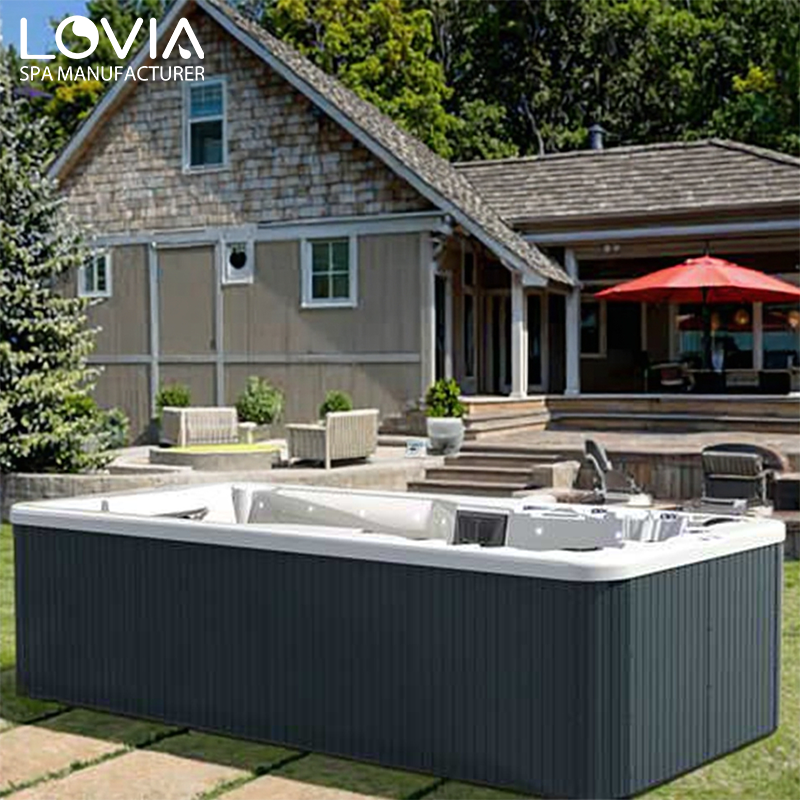
Does Shock Sanitizing a Swim Spa Directly Lower the pH Level?
Shock Sanitization May Lower pH Levels—But Not Necessarily
In a swim spa tub, whether or not shock sanitization leads to a drop in pH depends on several key factors:
•The type of sanitizer used
•The dosage applied
•The water's initial alkalinity level
•The organic matter content in the water
In other words, shock sanitization is not an operation that "inevitably lowers pH" by its very nature; rather, it is a high-intensity chemical process that may trigger changes in pH levels.
Why Does Shock Sanitization Often Affect a Swim Spa Tub's pH?
Chemical Reactions from Sanitizers Alter the Water's Acid-Base Balance
In swim spa tubs, the most common method of shock sanitization involves chlorine-based products. When these sanitizers enter the water, a series of reactions take place:
•Chlorine undergoes hydrolysis in the water
•Oxidation reactions occur with organic matter
•Various byproducts are generated
During this process, certain reactions release hydrogen ions (H⁺), thereby impacting the water's pH level.
The Extensive Oxidation of Organic Contaminants Also Indirectly Affects pH
A primary objective of shock sanitization is to eliminate accumulated organic matter from the water. When this organic matter is rapidly broken down:
•It alters the water's buffering system
•It consumes the existing alkalinity
•It reduces the water's capacity to maintain a stable pH
Consequently, in swim spa tubs with a high organic load, pH fluctuations are more frequently observed following shock sanitization.
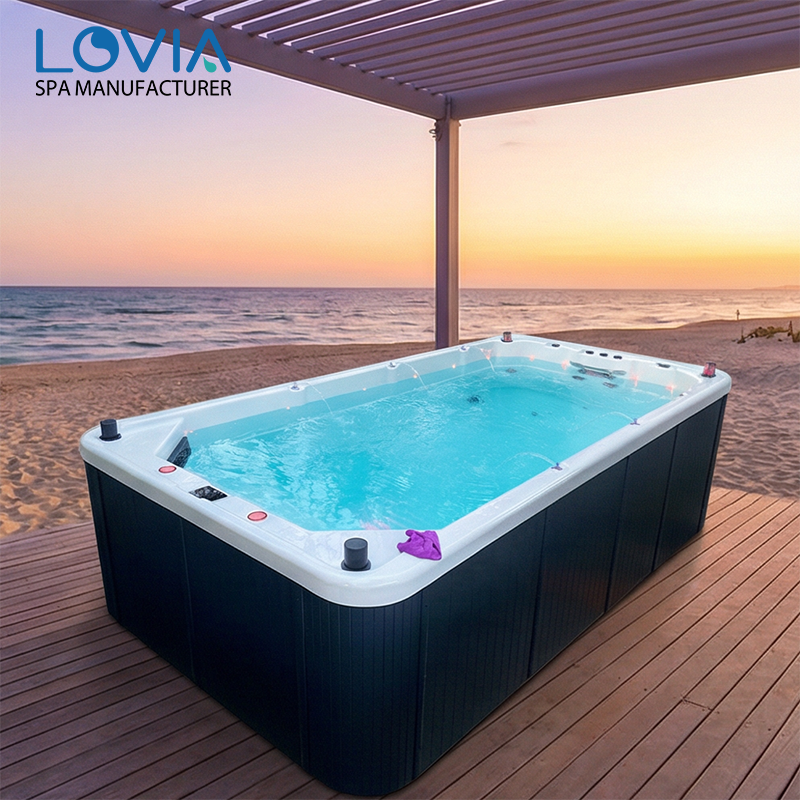
Do Different Types of Shock Sanitizers Have the Same Impact on pH?
The Specific Impact of Chlorine-Based Shock Agents on pH
In swim spa tubs, different sources of chlorine possess distinct chemical properties, resulting in varying effects on pH levels:
•Some chlorine preparations are acidic in nature
pH levels may drop following the shock treatment
•Some chlorine preparations are relatively neutral or slightly alkaline
The magnitude of the pH change tends to be relatively minor
This explains why, even under identical operating conditions, different swim spa users may observe inconsistent pH results.
Do Non-Chlorine Shock Sanitization Methods Affect pH?
Some swim spa tubs utilize non-chlorine oxidizers for shock treatment. These methods typically:
•Have a minimal direct impact on pH levels
•However, they may still indirectly trigger pH fluctuations by consuming the water's alkalinity
Therefore, even if traditional chlorine-based shock treatments are not used, monitoring pH levels remains an essential step.
Why does the pH level in a swim spa tub tend to become more unstable after shock treatment?
The shock process weakens the water's buffering capacity.
One of the key factors in maintaining pH stability in water is Total Alkalinity.
In a swim spa tub:
•Shock treatment significantly depletes alkalinity levels.
•When alkalinity drops, the pH level becomes more susceptible to fluctuations caused by external factors.
This explains why, after shock treatment, the water in some swim spa tubs may:
•Experience a sudden drop in pH.
•Exhibit frequent fluctuations.
High water temperatures amplify pH changes.
Swim spa tubs typically operate at elevated water temperatures; this high-temperature environment tends to:
•Accelerate chemical reactions.
•Increase the activity of disinfectants.
•Amplify the magnitude of acid-base fluctuations.
Consequently, the impact of the same shock treatment procedure on pH levels is often more pronounced in a swim spa tub than in a standard swimming pool.
Is it necessary to adjust the pH level of a swim spa tub immediately after shock treatment?
This is a common point of misunderstanding for many users.
Why you should not adjust the pH immediately after shocking:
Even after shock treatment is complete, chemical reactions continue to occur within the water:
•The disinfectant is still actively breaking down organic matter.
•Side reactions may not have fully subsided yet.
•The pH level may continue to undergo slight shifts.
Therefore, adjusting the pH too prematurely can actually lead to recurring fluctuations.
What is the more appropriate approach?
According to professional swim spa maintenance protocols, the following steps are typically recommended:
1.Complete the shock treatment.
2.Allow the water to circulate thoroughly.
3.Let the water sit undisturbed for a period of time.
4.Then, test the pH and alkalinity levels.
5.Adjust the levels based on the readings obtained once the water has stabilized.
This approach helps avoid unnecessary and repetitive interventions regarding water chemistry.
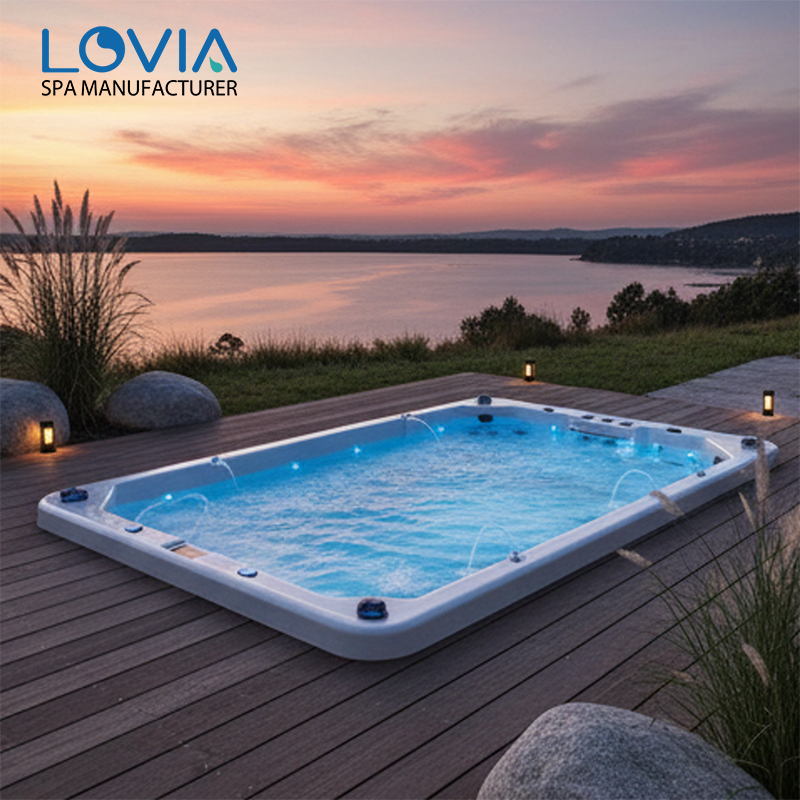
What problems can arise if the pH level in a swim spa tub remains too low after shock treatment?
If shock treatment causes a significant drop in pH that is not promptly corrected, it may lead to:
•Increased water irritation.
•Discomfort for the skin and eyes.
•A heightened risk of corrosion to metal components.
•Accelerated deterioration of seals and gaskets.
•Reduced effectiveness of the disinfectant.
Therefore, monitoring pH changes and managing them appropriately is an integral part of the shock treatment process.
How can you better control the pH level in a swim spa tub during the shock treatment process?
Assess Baseline Water Conditions Before Shock Treatment
Prior to performing a shock disinfection, it is recommended to first determine:
•The current pH level
•The total alkalinity range
•The cleanliness of the water
This helps anticipate the direction of potential changes that may occur following the shock treatment.
After Shock Treatment, Focus on Alkalinity—Not Just pH
The root cause of many pH instability issues does not lie in the pH itself, but rather in:
•Insufficient alkalinity
•Diminished buffering capacity
In a swim spa tub, stable alkalinity serves as the fundamental basis for stable pH.
